
The Risk in Collecting

The definition of fair market value is based on a relatively simple concept. It is the selling/buying price for an item to which the buyer and seller can both agree. If Todd McFarlane is willing to pay $3 million for the 70th home run that Mark McGwire hit, than that ball’s fair market value was $3 million.

Buyers are typically going to try to lower the asking price that is set by a seller, and often, it is because the seller is trying to charge more than the market value of the product. The market value is simply the amount for which something can be sold on a given market, but desperate individuals have a tendency to try to increase prices based on the fabricated prices set by others.

Many people use eBay to try to value their products. They will search eBay for the item that they are selling and convince themselves that it is worth what someone else is asking for it. They fail to see when that item last sold and how much it sold for. They fail to take the condition of the item into consideration.

Craigslist is full of pranksters and jokers, so it is hard to say if this listing was made by someone incredibly desperate or someone incredibly stupid/bored. Either way, research will show that the Peace Bear Beanie Baby can be purchased for as little at $5 online. The Peace Bear was always unique, since no two bears have the same color pattern, but that doesn’t mean the $30,000 asking prices have been justified.

Garcia, the same bear without the peace sign on the chest, was actually far more valuable when Beanie Babies had a significant value. Investing and collecting are all about staying on top of trends and knowing when to buy and sell. At this point, almost every Beanie Baby is worth little more than the material, or original asking price of $5. Accepting that you’ve missed a buying or selling window is just a part of the risk associated with collecting anything.
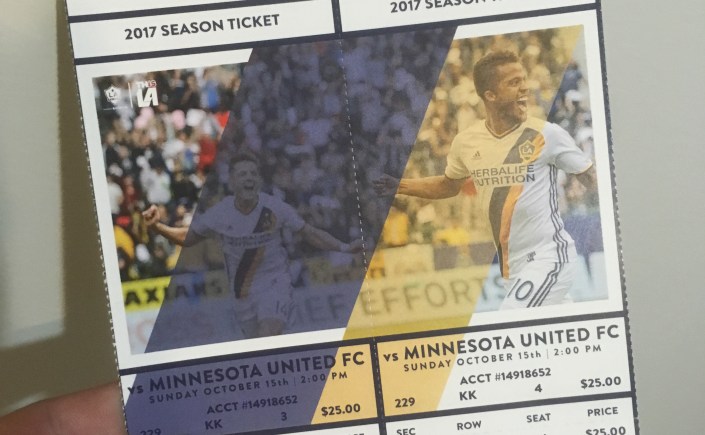
Should I Buy Season Tickets?

If you’re looking at this question and asking yourself, would I enjoy going to the games myself, you’re completely missing the point already. When we try to entertain and justify any purchase, whether it is a physical good or service, our goal is to find enough value in that product. Is value for an experience strictly based on how much you would personally enjoy that experience?

How many times have you done something or gone somewhere to make someone else happy? If one other person’s happiness wasn’t the reason, you may have felt obligated to attend an event based on some responsibility you felt. I, personally, have almost never attended a funeral for my own pleasure.

Taking that notion into consideration, how would you be able to find more value in season tickets, for example. Well, growing up with a father who worked in an industry that was very competitive, his “clients” would often have to find ways to entice him to choose their services over their competition. When they couldn’t afford to drop their rates any further to gain his business, they worked to earn his loyalty.

More often than not, their efforts were based around offering experiences and not physical goods to achieve this. Whether it was a day on their fishing boat, a meal at their restaurant, or their season tickets for a game, the approach worked. Plain and simple, it was extremely effective. 

While you might not necessarily be on their multi-million-dollar business level yet, you shouldn’t shy away from tactics that work. There is no issue with operating on a much smaller scale, as the gesture you make could easily lead to a significant return on your investment. 

Our most recent season ticket purchase was a strategic move, in that we did not spend too much and we also chose a sport that we enjoy watching. This provided us with many options; whether it was attending a game together, giving both tickets away, or having one of us bring someone to the game.

The personal and professionals benefits were unquestionable and the investment paid off, but before you make the purchase, there are a few things to take into consideration. If you’re trying to follow a strict budget for your business and you plan on writing the expenses off, consider what you’ll pay for parking and other travel costs.

Also, make sure you have a way to get rid of the tickets, last-minute or in case of an emergency. Whether that means having a friend that will take them off your hands or having a way of reselling them, there is no greater waste of resources than not using them, or letting them expire.

Think outside the box; they don’t have to be season tickets to a sporting team or venue. Just remember, there are so many ways to seal the deal with a potential client, and this approach is used all over the world. It is extremely popular because it is fun and effective, so don’t shy away from something new. Control your purchase so the reward outweighs the risk.

Taking Calculated Risks

Whether it’s a myth or not, we’ve all heard about what would be possible if we could access every part of our brain. Without going to overboard, imagine what the world would be like if we had that capacity to execute all of our ideas. Think about what your life would be like in that situation. It might just be too much to even imagine.

Whether it’s fortunate or unfortunate, we don’t have that ability to facilitate our plans so easily. It takes a lot of work and sometimes, when the facilitation requires a lot of resources, we decide that it’s just not worth it. It’s not worth the risk. How’d you decide that? Hopefully, you came up with a pros and cons list, where you weighed the risk and the reward.

Let’s take it another step further and really consider the risks and rewards to a place where we’re almost just thinking about one of those…risk. Liability. The red. Rejection. Negative feedback. Failure. Etc. It’s not easy to deal with all of those realities, so we often avoid them all together by just saying no to ourselves. Before you get to that point, just ask yourself one question, did you really calculate your risk?

Calculated risks are how I see every action in every day of my life. It’s not quite as systematic as how Neo sees the world in the Matrix, and it’s not quite as black and white as binary, but almost everything is quantifiable. Or, it’s quantifiable enough to be considered a calculation that makes it a little easier to use as a means for basing your decision.

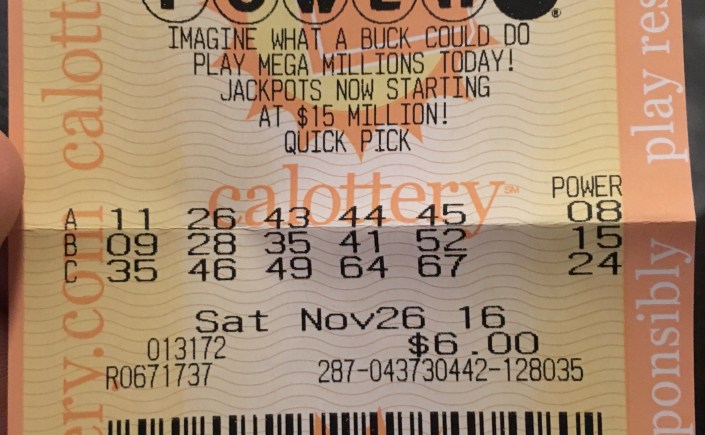
The featured image is a lottery ticket, as you can see. Why? While most people scoff at the lottery because of the insane odds that you have of winning a significant amount, (relative to the individual, but everyone wants the jackpot) I use it to explain risk calculation at the most basic level. Ignore the size of the jackpot and look at the cost to play.

Typically it’s 1 or 2 dollars for a single chance to win, no matter what those odds are. Can you afford it? I can’t answer that for you, nor can I answer how often you can afford to play it, or to what capacity every drawing, but you can calculate that answer very easily and determine whether or not it’s a risk you want to take. Scale this concept to whatever creative ideas that pass through your mind and calculate if you can take that risk.