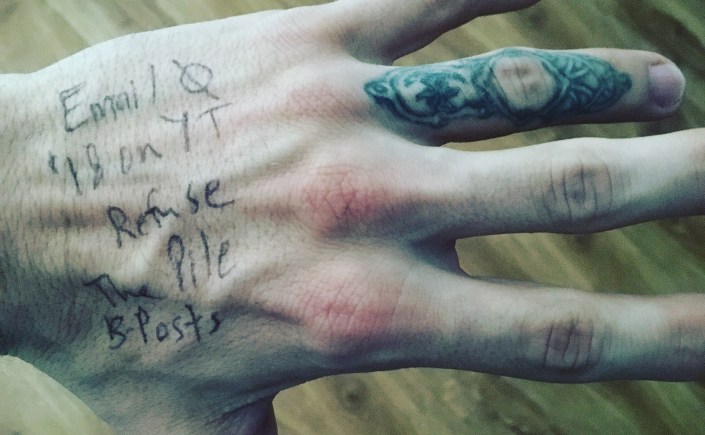
What Should You Do With a To Do List?

Keep it. Don’t just tear it up out of frustration and throw it in the rubbish bin. You’re better than that. You had the discipline to create a list of tasks that you thought were worthwhile, so don’t be so quick to abandon what you placed value in before.

There are certain ways to approach a to-do list, and while we’re not focusing on how to make one, the order has an impact on your actions. Hoping that you created a mindful to-do list that takes the order of events into consideration, there is one way to approach it.

Attack it. Ruthlessly. Viciously. With passion and intensity. Don’t delay. Don’t Flounder. Don’t reconsider what it says. Again, you made a to-do list. Now do everything on it.

Let’s look at this in another application. Let’s think of a to-do list that someone else made for you. Imagine your significant other made you a grocery list. Let’s even say that they cook the meals and you know nothing about food, so in this extreme situation, you’re going to get exactly what the list says. Right?

Now, think back to your list. Go at it with the same mindset. Plow through everything on that list, from top to bottom, considering you made it properly. Perform the first item on the list… now cross it off. Same with the second, third, forth, fifth, etc. Sometimes, completing a to-do list is about working hard. Sure, making the list might take longer and involve more thinking, but that’s the hard part. Or is it?

This might get the chores done, but on a grander scale, it’s about execution. It’s so easy to make grandiose plans, but going through with them is harder. If you practice making small plans and crushing them every day, even if it’s just household tasks like washing dishes, vacuuming, etc… you’re going to start to develop the ability to execute. Take that laser focus to your big ideas and one day you’ll start to see serious results.

So, again… what should you do with a to-do list? Do it.
 

Taking Calculated Risks

Whether it’s a myth or not, we’ve all heard about what would be possible if we could access every part of our brain. Without going to overboard, imagine what the world would be like if we had that capacity to execute all of our ideas. Think about what your life would be like in that situation. It might just be too much to even imagine.

Whether it’s fortunate or unfortunate, we don’t have that ability to facilitate our plans so easily. It takes a lot of work and sometimes, when the facilitation requires a lot of resources, we decide that it’s just not worth it. It’s not worth the risk. How’d you decide that? Hopefully, you came up with a pros and cons list, where you weighed the risk and the reward.

Let’s take it another step further and really consider the risks and rewards to a place where we’re almost just thinking about one of those…risk. Liability. The red. Rejection. Negative feedback. Failure. Etc. It’s not easy to deal with all of those realities, so we often avoid them all together by just saying no to ourselves. Before you get to that point, just ask yourself one question, did you really calculate your risk?

Calculated risks are how I see every action in every day of my life. It’s not quite as systematic as how Neo sees the world in the Matrix, and it’s not quite as black and white as binary, but almost everything is quantifiable. Or, it’s quantifiable enough to be considered a calculation that makes it a little easier to use as a means for basing your decision.

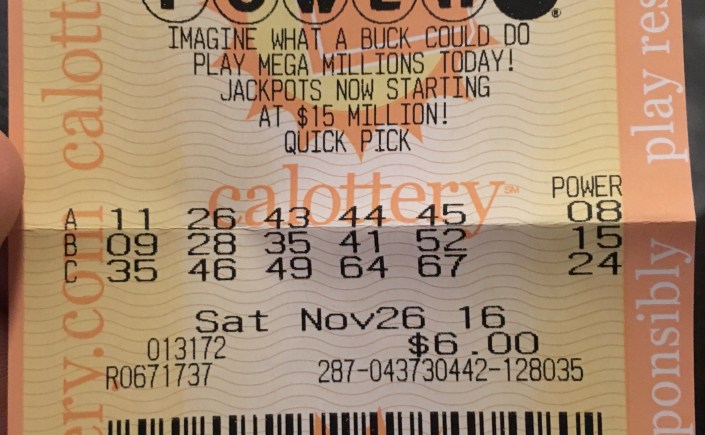
The featured image is a lottery ticket, as you can see. Why? While most people scoff at the lottery because of the insane odds that you have of winning a significant amount, (relative to the individual, but everyone wants the jackpot) I use it to explain risk calculation at the most basic level. Ignore the size of the jackpot and look at the cost to play.

Typically it’s 1 or 2 dollars for a single chance to win, no matter what those odds are. Can you afford it? I can’t answer that for you, nor can I answer how often you can afford to play it, or to what capacity every drawing, but you can calculate that answer very easily and determine whether or not it’s a risk you want to take. Scale this concept to whatever creative ideas that pass through your mind and calculate if you can take that risk.